
Roatan Island from our balcony

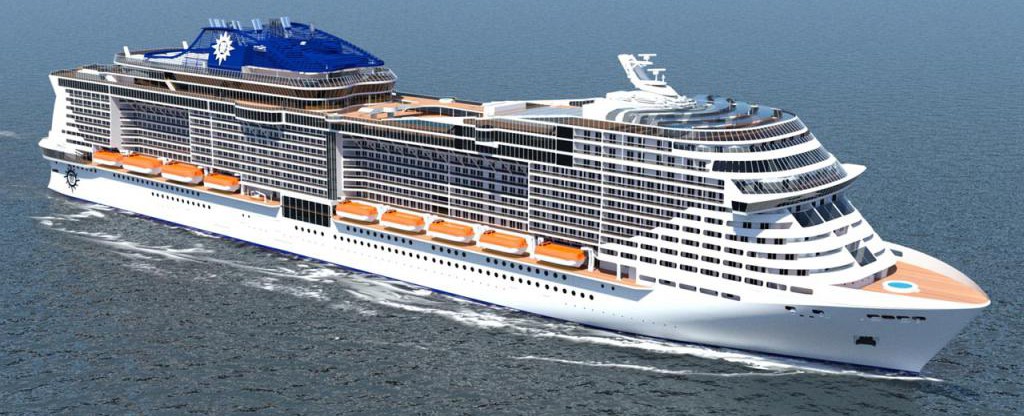
Meraviglia docked in Roatan
We have been to Roatan Island before and we like it. The people are laid-back and friendly and the island, though not exotic, has some beautiful beaches and fine houses. It also has a distressing number of shacks. But it still ranks higher, in our eyes, than either Costa Maya or Belize City.
And it has a dock. Two, actually – one exclusively for Carnival Cruise Lines and one for all others. We docked at the “for all others” one in bustling downtown Coxen Hole. This is a little hamlet consisting of one street along the harbor lined with small shops. The port complex completely dominates the town.
We started the day with breakfast at Waves restaurant where we were actually served breakfast from a menu rather than grabbing it from a buffet line. We then collected our things and proceeded to the TV Studio and Bar to start our 3.5 hour “no barriers island tour.” Because we weren’t sure how much walking would be involved and because a “no barriers” tour suggested that it would be wheelchair-friendly, we brought both the wheelchair (for Jett) and the walker (for Sybil). Good thing that there were no other “disabled” people on the tour because the 12 people in the group completely filled the small van. The wheelchair and walker had to be folded and put into the front passenger seat. It was a tight fit.

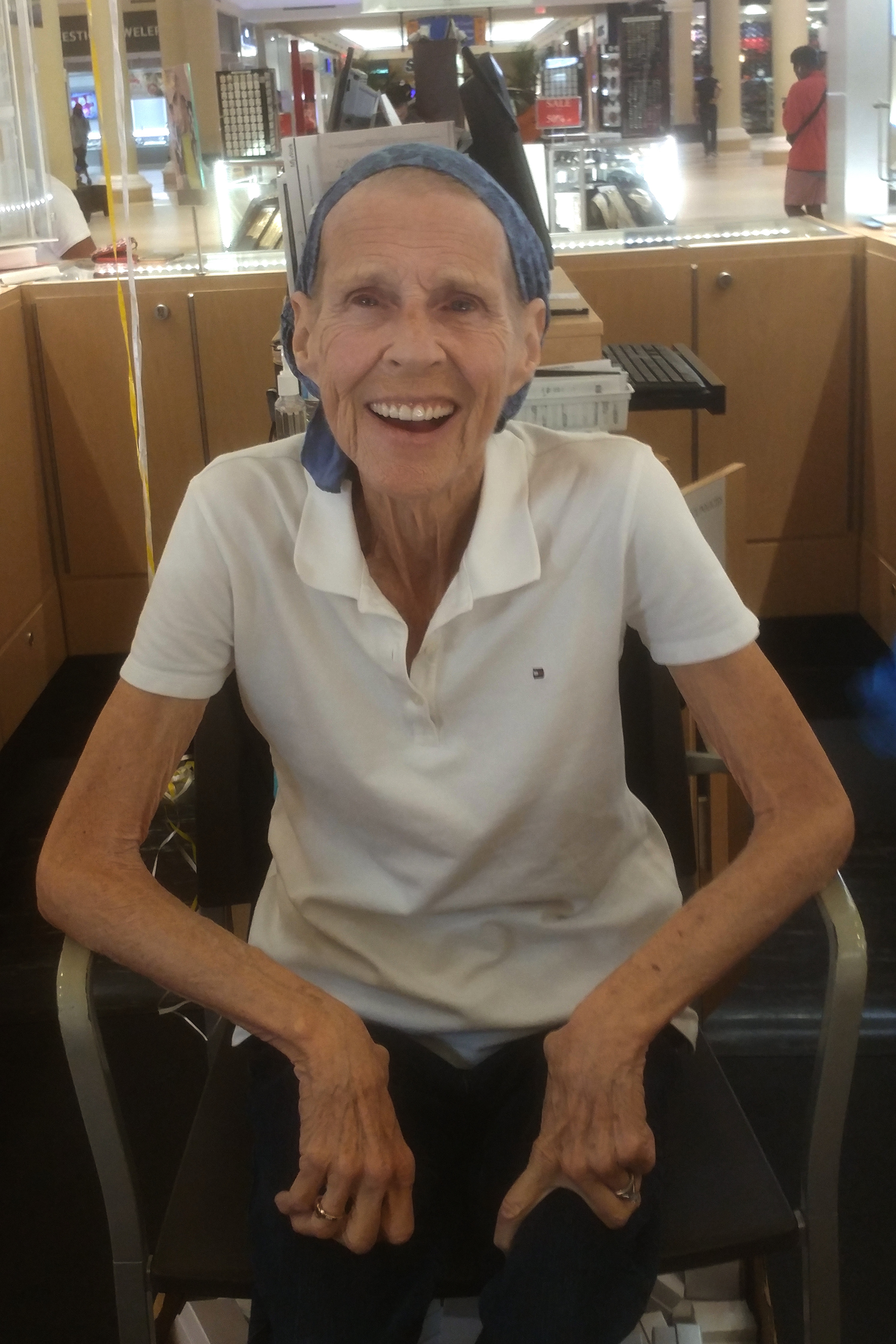
Three sisters in the van

The flooded Buccaneer inlet
The first stop was “The Buccaneer”, a beach tourist spot. It featured a museum which we all ignored, a coffee shop that served very tasty iced Honduran coffee and an expansive verandah overlooking a shallow inlet from the sea. It was high tide, which put about two feet of water in the inlet but it likely is just a sandy beach area much of the day.
The next stop was an iguana farm. Yes, they breed and raise iguanas, just to show them off to tourists. Elsewhere on the island iguana meat is featured on the menu, but at the farm they are just for show. Wall-to-wall iguanas. It is hard to avoid stepping on them. In fact I stepped on one’s tail. I apologized.

The inlet from the verandah

Jett on the verandah

A bevy of hammocks
The third stop on the tour was Pristine Bay. This was just a photo op at the top of a hill overlooking the lowlands on the south side of the island. Nice view.

One of many iguanas
The fourth and final stop was a “beach stop” of an hour. Since none of us were interested in either sun or sand, we figured to spent the time having lunch and a drink. Good plan, but the restaurant was unprepared for the number of lunch guests. We got neither food nor beverage in that hour. Since all of these shore excursions are booked days, if not weeks, in advance, it is hard to understand how the restaurant could be surprised by the volume.

The view from Pristine Bay

African dance troupe
The dinner was preceded by an “African dance” by a group of 6 musicians and dancers, all of whom appeared to be bored to distraction. A total waste of 15 minutes. And why an African dance in Honduras?
In short, the last stop was a bust. The tour overall was interesting and satisfied our need to do *something* in Roatan, but at $70 per person it was, like most other cruise excursions, overpriced.

Last light

Filet and potato
We also caught the brief “dome show” on the arcade ceiling. This one was an undersea fantasy where a submarine dives, then the roof peels back to reveal all sorts of aquatic life, including mermaids. Beautiful.

Dome show, inside the sub

Dome show, roof peeled back