

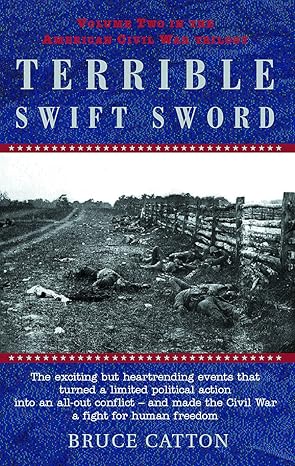
This is the second volume of Catton’s Civil War trilogy. It covers just one year of the war – 1862. That year warrants an entire volume because it is the year that shaped the war. When the year began, there was a belief on both sides that the war would be brief and that the differences between North and South could be resolved without great bloodshed and without eliminating the institution of slavery. When the year ended, those illusions were gone. It would be a long, bloody war and if the North won then slavery would be banished from the entire nation.
1862 was the year when Robert E Lee was put in charge of the Army of Northern Virginia. He is the man who, pretty much single-handedly, eliminated the possibility of a short war. While the North made significant advances in both the west (e.g., the capture of New Orleans) and the east (e.g., assuming control of the Carolina coast), Lee, with an army significantly smaller than the North’s, managed to out-maneuver his counterpart, the ever-cautious George McClellan. The Seven Days battle to the east of Richmond the last week in June put an end to the North’s hope for a quick victory. But the devastating battle in the fall at Antietam Creek near Sharpsburg MD – a tactical draw but with losses heavier than Lee could afford – ended the South’s hope for a quick victory. After Antietam Lincoln issued the Emancipation Proclamation, freeing all slaves, thereby redefining what the war was about. At the end of 1862 it was clear to all that the Civil War would be long and bloody and would forever reshape the Union.
8 out of 10.